
lotus labs
AI-Powered Updates Coming Soon to Your Favorite Apps


Slack: SlackGPT
SlackGPT is a new chatbot for Slack that can help users with a variety of tasks, such as finding information, scheduling meetings, and generating creative content. Powered by OpenAI's GPT-3 language model, SlackGPT will help you work smarter, learn faster, and communicate better. Each time you log in, you will be able to quickly get up to speed with one click as the AI technology can summarize all of a channel’s unread messages into a brief summary. SlackGPT also has the ability to automate emails or messages based on the audience further increasing daily productivity. Additionally, with AI assistance built natively into Slack’s message composer and canvas, Slack GPT can also help you tweak your drafts until perfection. With a few clicks, you can create content or adjust the tone at any point in your writing with options to shorten, elaborate, or change the tone.
Grammarly: GrammarlyGO
GrammarlyGO is a new mobile app available for iOS and Android devices that uses AI to help users with grammar, spelling, and punctuation. GrammarlyGO brings the power of generative AI to the Grammarly experience, providing assistance across the digital spaces you write in most. There are a variety of ways to use GrammarlyGO as it can keep track of the context of your writing as well as your preferred writing style while offering suggestions. You can accelerate your writing process by prompting GrammarlyGO with basic instructions to conceive polished drafts. You can simplify rewriting by inputting your written text into GrammarlyGO and letting the app offer different versions of your original ideas. Finally, you can facilitate brainstorming as GrammarlyGO can generate any idea or structure straight to the page you are already on. While users will be able to input 100 prompts per month into GrammarlyGO for free, they will need the premium version for more monthly inputs.
Zoom: ZoomIQ
The purpose of Zoom IQ is to be a smart companion that empowers collaboration and unlocks people’s potential by summarizing chat threads, organizing ideas, drafting content for chats, emails, and whiteboard sessions, and creating meeting agendas. As a result, this AI- add-on has many notable features such as being able to analyze meeting recordings and provide insights into how meetings are being run. This information can then be used to improve meeting performance and productivity. If you have to join a Zoom meeting late, you can simply ask Zoom IQ to summarize what you have missed in real-time and even ask further questions. If you need to create a whiteboard session for your meeting, Zoom IQ can generate it based on text prompts. If you need an additional perspective for a Zoom chat, you can use Zoom IQ to compose messages based on the conversational context. With its new AI innovations, Zoom appears to be poised for further growth.
Discover 3 AI tools that are useful for any professional including those for productivity automation and data analysis
65e0e1dcb09181168356dc07
lotus labs
© 2026 LOTUSLABS All rights reserved.


AI-Powered Updates Coming Soon to Your Favorite Apps
Slack: SlackGPT
SlackGPT is a new chatbot for Slack that can help users with a variety of tasks, such as finding information, scheduling meetings, and generating creative content. Powered by OpenAI's GPT-3 language model, SlackGPT will help you work smarter, learn faster, and communicate better. Each time you log in, you will be able to quickly get up to speed with one click as the AI technology can summarize all of a channel’s unread messages into a brief summary. SlackGPT also has the ability to automate emails or messages based on the audience further increasing daily productivity. Additionally, with AI assistance built natively into Slack’s message composer and canvas, Slack GPT can also help you tweak your drafts until perfection. With a few clicks, you can create content or adjust the tone at any point in your writing with options to shorten, elaborate, or change the tone.
Grammarly: GrammarlyGO
GrammarlyGO is a new mobile app available for iOS and Android devices that uses AI to help users with grammar, spelling, and punctuation. GrammarlyGO brings the power of generative AI to the Grammarly experience, providing assistance across the digital spaces you write in most. There are a variety of ways to use GrammarlyGO as it can keep track of the context of your writing as well as your preferred writing style while offering suggestions. You can accelerate your writing process by prompting GrammarlyGO with basic instructions to conceive polished drafts. You can simplify rewriting by inputting your written text into GrammarlyGO and letting the app offer different versions of your original ideas. Finally, you can facilitate brainstorming as GrammarlyGO can generate any idea or structure straight to the page you are already on. While users will be able to input 100 prompts per month into GrammarlyGO for free, they will need the premium version for more monthly inputs.
Zoom: ZoomIQ
The purpose of Zoom IQ is to be a smart companion that empowers collaboration and unlocks people’s potential by summarizing chat threads, organizing ideas, drafting content for chats, emails, and whiteboard sessions, and creating meeting agendas. As a result, this AI- add-on has many notable features such as being able to analyze meeting recordings and provide insights into how meetings are being run. This information can then be used to improve meeting performance and productivity. If you have to join a Zoom meeting late, you can simply ask Zoom IQ to summarize what you have missed in real-time and even ask further questions. If you need to create a whiteboard session for your meeting, Zoom IQ can generate it based on text prompts. If you need an additional perspective for a Zoom chat, you can use Zoom IQ to compose messages based on the conversational context. With its new AI innovations, Zoom appears to be poised for further growth.
Get ready for AI-powered updates coming soon to your favorite apps with enhanced features smarter recommendations and improved user experiences
65e0e1dcb09181168356dc08
lotus labs
© 2026 LOTUSLABS All rights reserved.


Clarifying AI, Machine Learning, Deep Learning, Data Science with Venn Diagrams
Harnessing the capabilities of artificial intelligence, machine learning, deep learning, and data science will be instrumental in the future; however, the average person likely only has a surface level understanding of how these four terms are related. Therefore, the purpose of this article is to clarify each of these terms utilizing Venn Diagrams. We will begin with artificial intelligence, which can be thought of as human intelligence exhibited by a machine.
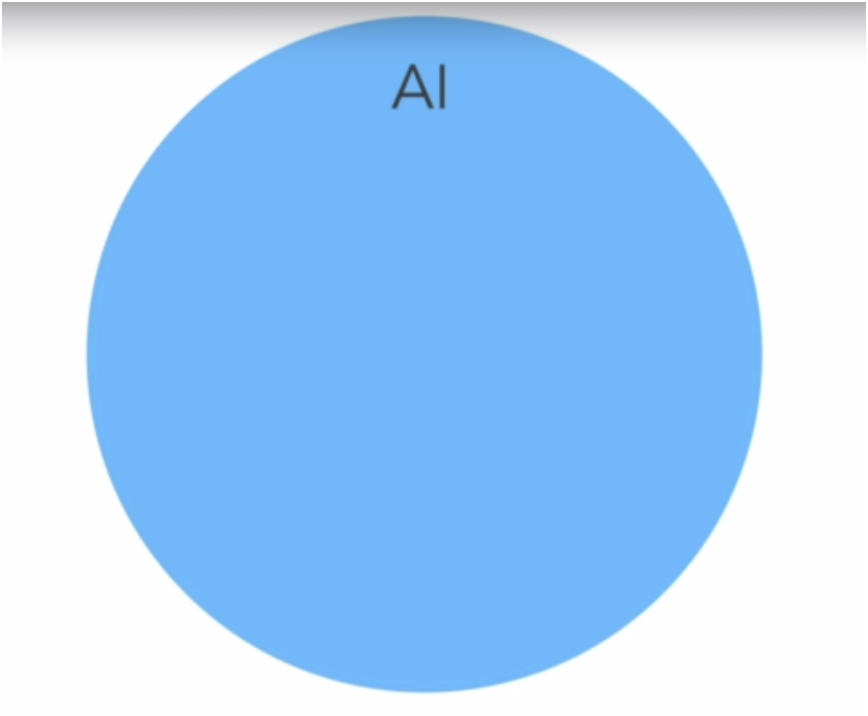
Humans can only perform specific tasks after learning them, and we improve our execution of these tasks through practice. Artificial intelligence works the same way and we refer to this process as machine learning. In terms of a venn diagram, machine learning is a subset of AI: We teach a specific task to the machines, they learn it and improve their execution of it -ultimately faster than human capabilities- until the task becomes integrated into their overall intelligence. Let’s include Machine Learning into the picture.
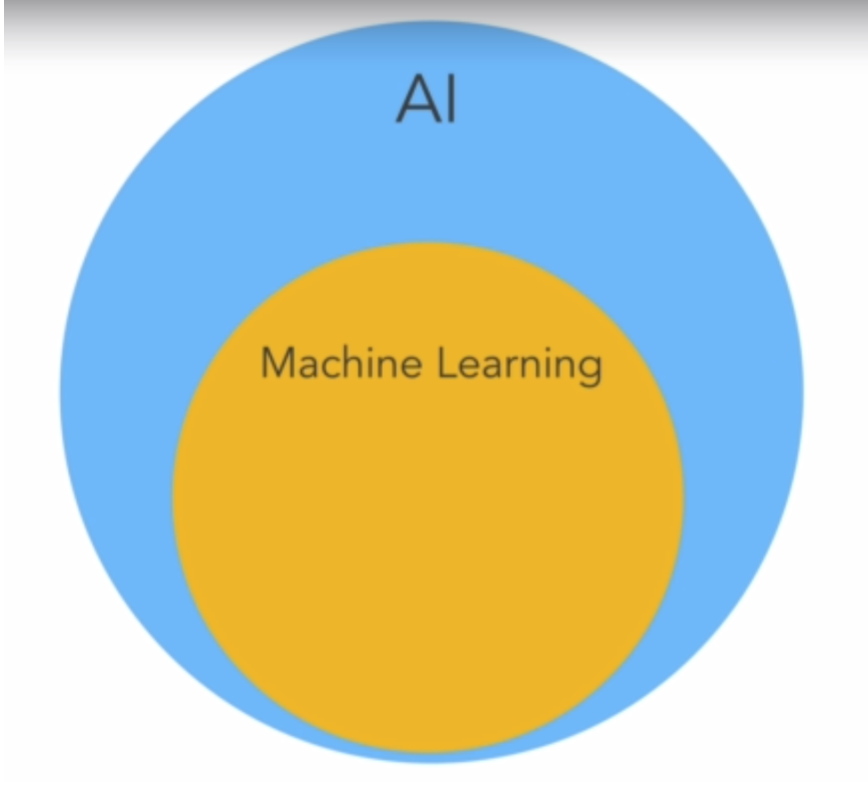
Now we’ve understood AI and ML, what is deep learning? Before we get to that, it is important to note that reading and analyzing images is a task that that machines are currently not very efficient at. Deep learning is necessary in these cases because while machine learning is restricted to structured or semi structured data, deep learning allows machines to input images, voices and videos. We’ll take a glance at the picture with deep learning.
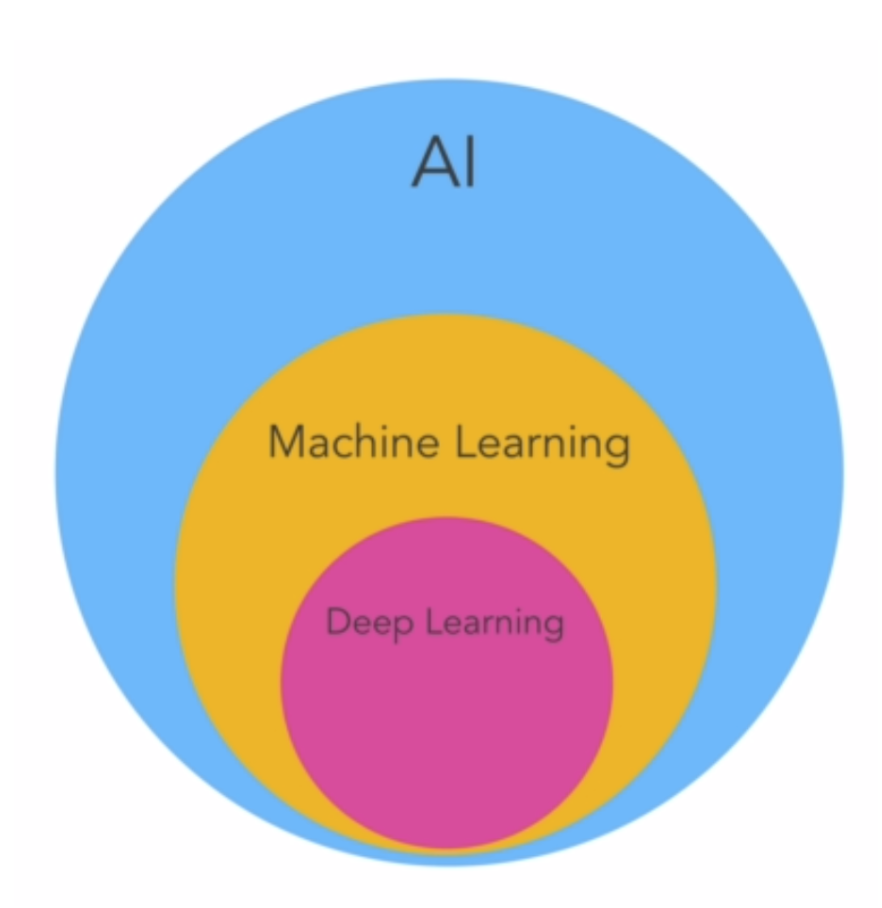
We have looked at AL, ML and DL. So where does Data Science fit in? Is it not a completely separate field? This is actually a misconception because oftentimes the roles of a Data Scientist and Machine Learning Engineer overlap. Data science involves analyzing data for the purpose of business goal, but many times data pools are too vast for humans to manually go through. As a result, data scientists must be able to harness artificial intelligence and all its processes because not only can artificial intelligence analyze extensive data quantities, but it can also churn out unique insights that humans were not even aware of in the first place.
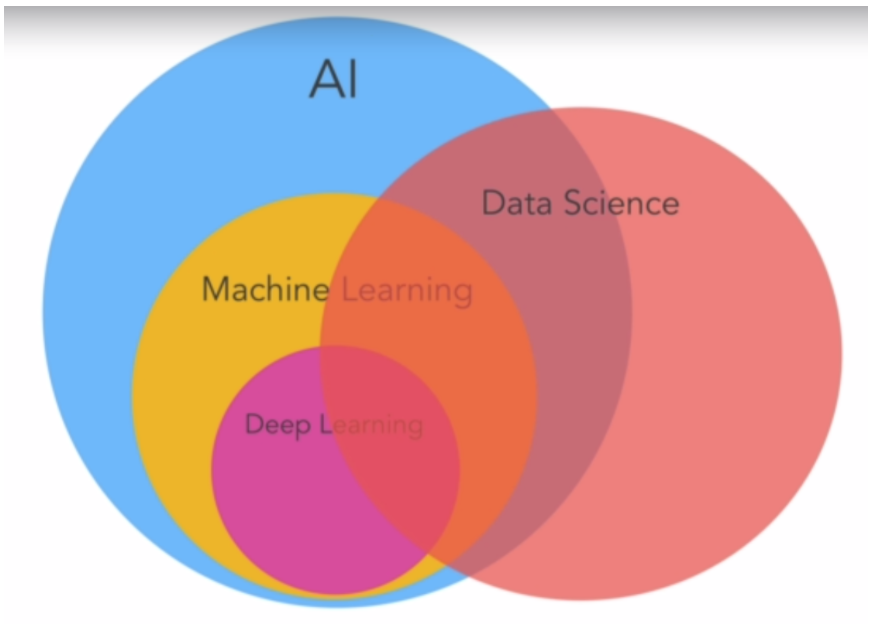
While all four of these terms may seem abstract at first glance, with the help of Venn diagrams, they can be understood more clearly. In summary, artificial intelligence is the collection of tasks that machines are able to execute. Machines learn these tasks with the help of machine learning and deep learning for specific cases. Together, these three processes are utilized in data science so that data can be converted into insights. Since unique insights usually translate into profit for businesses, it is safe to assume that we will continue to see more and more of these autonomous machine processes in the future.
Clarify AI, machine learning, deep learning, and data science concepts with Venn diagrams to understand their relationships and distinct roles in technology and analysis.
65e0e1dcb09181168356dbff